


Got the Itch to Ski Again, But the Season Feels Months Away?
It's late June, the lifts back home have been still for weeks, and yet somehow you find yourself thinking about powder days. That itch doesn't care that opening day is months out. It shows up anyway, usually triggered by nothing more than a cold morning or an old trip photo, and there's no real way to scratch it. At least not at home.
But the season isn't actually months away everywhere. While the northern hemisphere sits in its off-season, Argentina and Chile are heading into a full winter of their own, with snow on the ground from roughly June through October. The terrain holds up against anything in the Rockies or the Alps, and the crowds are a fraction of what you're used to. If the itch has been getting worse by the week, South America might be the fastest way to actually deal with it.
My Top 5 Ski Resorts in South America - Snowboard All Year Round
This video highlights five premier South American ski resorts—Cerro Catedral, La Hoya, Las Leñas, Valle Nevado, and Corralco—that offer unique terrain and backcountry experiences for snowboarders looking to extend their season year-round.
A good way to get a feel for what's down there before you book anything is Kevin from SnowboardProCamp's rundown of his five favorite resorts in the region. It's worth watching alongside this piece, since he covers the terrain with a rider's eye in a way that's hard to translate into words alone. Consider it the visual companion to what follows.
Cerro Catedral: The Big One
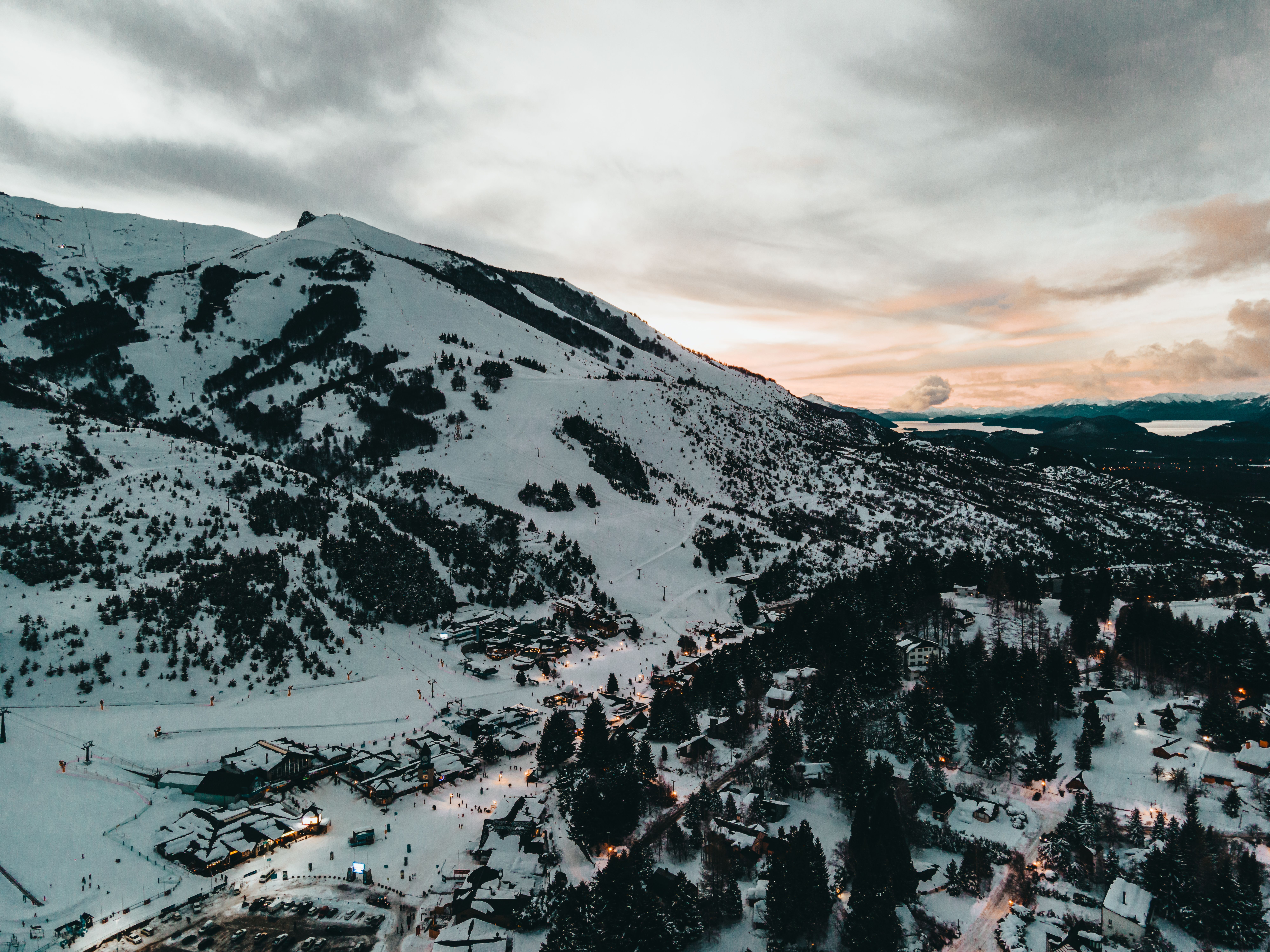
Villa Catedral sits right at the base of the mountain, which means the apres scene starts the moment you step off the lift rather than after a shuttle ride back to town.
Cerro Catedral, just outside Bariloche in Argentina's Patagonia region, is the largest ski resort in South America, and it feels like it. The terrain spreads across a genuinely massive footprint, with groomed runs for cruising, tree-lined sections for people who like a bit of shelter from the wind, and alpine bowls that open up into serious backcountry. The view from the top, looking out over Nahuel Huapi Lake and the surrounding peaks, is the kind of thing that makes you forget your legs are tired.
This is a resort that rewards a few days of exploring rather than a single rushed visit. Intermediate riders will find plenty to keep them happy on the groomed sections, while anyone chasing more technical lines can work toward the backcountry access points once they've got a feel for the mountain. It's not a place to underestimate, though. The scale alone means it's easy to end up somewhere you didn't plan to be, so pace yourself on day one.
La Hoya: Small Town, Big Heart

Don't let La Hoya's reputation as a family hill fool you. That lift is headed straight toward terrain that has nothing mellow about it.
A couple of hours south of Bariloche, near the town of Esquel, La Hoya is everything Catedral isn't: small, quiet, and deeply local. There's no pretense here. The runs are mellow and forgiving, which makes it a genuinely good option for families or anyone still building confidence on snow.
What sets La Hoya apart is the access to big-mountain backcountry lines just beyond the groomed terrain, which means it's not purely a beginner hill. More experienced riders can use it as a base for exploring untouched lines without the crowds you'd find at a bigger resort. It's the kind of place where the lift operators remember your name by day two.
Las Leñas: Not for the Faint of Heart

The hotel and condos cluster right at the base, a reminder that everything beyond them, including that TS Marte terrain, is the kind of backdrop most ski towns can only dream of.
If Catedral is the all-rounder and La Hoya is the family option, Las Leñas is the one for people who already know exactly what they're looking for. The resort's reputation rests largely on the TS Marte chairlift, which opens access to some of the most demanding big-mountain terrain in the world. We're talking steep couloirs, exposed faces, and lines that have shown up in ski films for decades.
This is advanced terrain, full stop. Avalanche safety gear, a beacon, a probe, a shovel, isn't optional here; it's required, and for good reason. If you're not already comfortable assessing snowpack and managing avalanche risk, Las Leñas is a place to hire a guide rather than wing it. For the right rider, though, there's nothing else quite like it on the continent.
Valle Nevado: Built for the Park

The wide bowls in the distance are the real draw, but the cruiser terrain right under the lift is exactly why intermediate riders end up loving Valle Nevado just as much as the park crowd.
Crossing into Chile, Valle Nevado takes a different approach. It's one of the larger resorts near Santiago, and it's particularly well suited to park riders thanks to a terrain park that's actually maintained properly, with its own dedicated button lift so you're not waiting in line with everyone else heading to the main runs.
That said, calling it a park-only resort undersells it. Valle Nevado also gets excellent powder when storms come through, and the terrain variety means there's something for nearly every skill level, plus backcountry options for anyone wanting to push further out. Its proximity to Santiago also makes it one of the more convenient resorts to reach, which matters if you're trying to maximize time on snow over a shorter trip.
Corralco: Skiing a Volcano

Even from the parking lot, the Lonquimay volcano makes its case. Most resorts don't ask you to ski into the thing you're staring at on the way in.
Corralco sits on the slopes of the Lonquimay volcano in southern Chile, and it offers an experience that's genuinely different from anywhere else on this list. Riders can hike up and drop into the volcano's crater, which is about as close as most people will ever get to skiing something that sounds like it belongs in a documentary.
The resort has a small, local feel and a loyal following, and there's enough terrain to spend several days exploring without getting bored. It's a longer trip to reach than Valle Nevado, but for riders who want a sense of discovery rather than convenience, it's worth the extra travel time.
Planning the Trip
Getting there
Santiago and Buenos Aires are the main international gateways, with direct flights from several major North American and European cities during the southern winter. From either city, domestic flights or long-distance buses get you to the resort regions, though Bariloche has its own airport that cuts travel time significantly if you're focused on Catedral or La Hoya.
Moving between resorts
Argentina and Chile share a border for most of their length, but crossing it isn't always quick. Mountain passes can close due to weather, and some crossings require advance planning. It's generally easier to group your trip by country rather than bouncing back and forth, unless you've built in extra buffer days.
How many resorts, and how long
Two to three resorts in a single trip is realistic without feeling rushed. A ten to fourteen day trip gives you enough time to settle into each mountain, deal with a weather day or two, and actually enjoy yourself rather than living out of a suitcase. Trying to hit all five spots from this list in one go is possible but turns the trip into more of a logistics exercise than a vacation.
Gear
Bringing your own boots is almost always worth it, since fit matters more than anything else and rental boots rarely match your feet well. Skis and snowboards are more of a toss-up. Rental quality at the bigger resorts like Catedral and Valle Nevado is generally solid, so unless you have a specific board or ski you're attached to, renting locally can save you the hassle and the airline fees.
Cost
Day lift tickets across the major resorts generally run somewhere between 55 and 130 US dollars, depending on the resort and how close to peak season you're visiting. Las Leñas tends to sit at the higher end given its reputation and terrain, while spots like La Hoya and Corralco are noticeably cheaper thanks to their smaller, more local setup. Buying tickets in advance and traveling outside the busiest weeks can shave a meaningful amount off both lift tickets and lodging. Beyond lift access, overall trip costs in Argentina and Chile still tend to land below what a comparable trip in North America or the Alps would run, especially once you factor in lodging, food, and gear rental, though that gap has narrowed in recent years as prices have climbed.
Amenities
Bariloche and Santiago both offer a full range of lodging from budget hostels to upscale hotels, plus restaurants, gear shops, and apres options that wouldn't feel out of place in any major ski town. Smaller spots like La Hoya and Corralco are more limited, with fewer dining options and a more low-key village feel, which is part of their charm but worth knowing going in.
Best time for powder
July through early September tends to bring the most consistent snowfall across the region, with July and August generally considered peak season for both snow quality and coverage. Early season visits in June can be hit or miss depending on how the storms have lined up, while late season into October offers better weather and softer corn snow but less chance of fresh powder.
Snow quality
Conditions vary more by storm cycle than by resort, but as a general rule, the higher-elevation spots like Las Leñas and Corralco tend to hold snow longer and see less of the wind-affected, inconsistent surface you sometimes get at lower elevations. Valle Nevado and Catedral see enough traffic that groomed runs stay in good shape, while the backcountry terrain at all five resorts depends entirely on what's fallen recently.
There's something genuinely satisfying about not having to wait out the itch. South America offers terrain serious enough to satisfy anyone chasing steep lines, family-friendly enough for those just getting started, and varied enough that a single trip rarely feels repetitive. The travel takes a bit more planning than a weekend drive to your usual spot, but for anyone counting down the months until their own resort reopens, it turns out you don't have to count down at all.


