The wellness travel industry has a language problem. Words like "holistic," "restorative," and "transformative" appear on so many retreat brochures that they've stopped meaning anything. What travelers actually want, when they spend real money on a health-focused trip, is some evidence that it works. The Nicoya Peninsula in Costa Rica is one of the few places on earth where that evidence exists. It isn't a marketing claim. It's a research finding.
Why Nicoya Is Different
In 2004, National Geographic explorer Dan Buettner, working with a team of demographers and the National Institute on Aging, identified five places in the world where people regularly live past 100 at roughly ten times the rate of the average American. They called them Blue Zones. Nicoya is the only one in the Americas.
The five cantons that make up Nicoya's Blue Zone, Hojancha, Nandayure, Carrillo, Santa Cruz, and Nicoya itself, were not selected because people report feeling well. They were selected because the data on mortality and lifespan holds up under scrutiny. The research found that roughly 80 percent of how long a person lives comes down to lifestyle and environment, not genetics. That finding is why wellness travel, done correctly, is worth thinking about at all.
The Science Behind the Lifestyle
Buettner's team identified nine patterns shared by long-lived populations across all five Blue Zones, which they called the Power 9. None of them require a clinic or a supplement. They include moving naturally throughout daily life rather than through structured exercise, maintaining close family and social ties, having a defined sense of purpose (called "plan de vida" in Nicoya, roughly translating to a reason for getting up in the morning), eating a mostly plant-based diet, and stopping eating before full satiation, a practice supported by research on caloric restriction and metabolic health.
The Nicoya-specific science adds two more data points worth noting. First, the local water supply is unusually high in calcium and magnesium, both of which are associated with lower rates of cardiovascular disease and stronger bone density. Second, chronic sun exposure at this latitude supports consistent vitamin D production, which plays a documented role in immune regulation, mood, and sleep quality. These are not folk remedies. They show up in peer-reviewed literature.
Eating the Way Locals Actually Eat
The traditional Nicoyan diet is not complicated or expensive, which is part of what makes it interesting. It centers on nixtamalized corn tortillas, black beans, squash, and an abundance of tropical fruit. The nixtamalization process, in which dried corn is soaked in an alkaline solution before grinding, significantly increases the bioavailability of niacin and amino acids. Black beans are among the most researched legumes for lowering LDL cholesterol and reducing inflammation markers.
Gallo pinto, the traditional Nicoyan breakfast of rice and black beans, cooked with red pepper, onion, garlic, scallions, and cilantro, finished with Lizano sauce. Simple ingredients, serious longevity credentials.
📍Nicoya📌 Nicoyan Breakfast
A week of eating this way is not a detox. It is a demonstration that the baseline American diet, heavy in ultra-processed food, refined carbohydrates, and added sugar, is the anomaly. Coming home with a habit of eating legumes five or more days a week is one of the most meaningful and clinically supported changes a person can make. The Harvard T.H. Chan School of Public Health research on legume consumption and cardiovascular risk supports this directly.
When choosing a retreat or hotel on the peninsula, look for properties sourcing locally and cooking traditionally. The best ones serve rice and beans at breakfast, not as a novelty but because that's what a Nicoyan morning actually looks like. Nantipa in Santa Teresa does this deliberately, using regional ingredients and drawing on traditional recipes passed through generations.
Movement That Doesn't Feel Like Exercise
Nicoyans are not gym-goers. They walk, garden, fish, and carry things. What researchers call NEAT (non-exercise activity thermogenesis) refers to the calories burned in all movement that isn't formal exercise. Studies consistently show that people who accumulate daily low-intensity movement have better metabolic outcomes than sedentary people who do one hour of vigorous exercise and sit the rest of the day. The architecture of daily life in Nicoya builds NEAT in organically.
Local fishermen at sunrise on the Nicoya coast. The movement that underpins Blue Zone longevity rarely looks like exercise.
📍Nicoya
A good wellness property mirrors this. Look for places where the programming isn't relentlessly scheduled and where the environment invites walking to the beach, surfing at whatever level you're at, hiking to a waterfall, or going out with local fishermen. The Bodhi Tree Yoga Resort in Nosara structures mornings around yoga practice and leaves afternoons largely open for guests to move through the natural landscape of Playa Guiones on their own terms. That low-pressure structure is more aligned with how Blue Zone movement actually functions than any boot camp format.
The Social Architecture of Long Life
A 2015 meta-analysis by researcher Julianne Holt-Lunstad found that social isolation carries a mortality risk comparable to smoking 15 cigarettes a day. Nicoyans live in tight inter-generational families with dense community ties. They eat together. They help raise each other's children. The social fabric is not incidental to their longevity. It is structural.
For anyone who has spent a career prioritizing work over relationships, the research offers something useful: it is not too late. A 2020 UK study found that isolated older adults who received a single friendly phone call per week showed measurable improvements in stress response and overall health within three months. The Health and Retirement Study found that gaining new close confidants at any life stage is associated with fewer depressive symptoms. The biology does not require a lifetime of dense social infrastructure to respond. It responds to connection now.
That is also an argument for not going alone. Booking this kind of trip with an old friend, a sibling, or the college roommate you've been meaning to visit for three years is not just logistically convenient. It is, based on the evidence, one of the healthiest decisions you can make. On the ground, look for retreats with shared meals, communal spaces, and programming that creates conversation rather than just filling a schedule. The point is not forced bonding but a week spent with other people, face to face, away from screens. The research suggests that alone is enough to move cortisol levels and inflammatory markers in the right direction.
The research on social connection and longevity is unambiguous. Shared experience, even brief, moves the needle.
📍Nicoya
Where to Stay
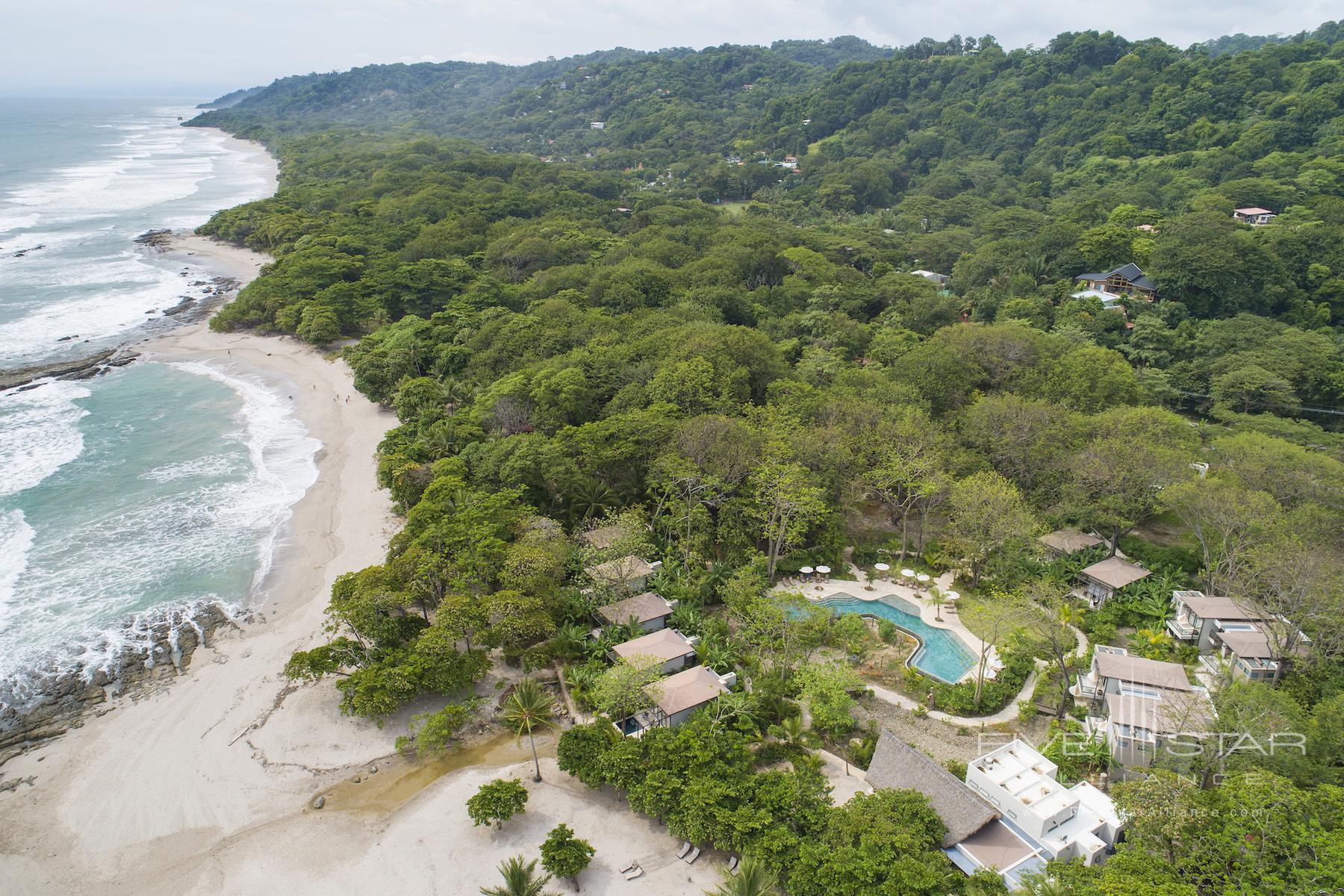
Nantipa, Santa Teresa. A 19-bungalow beachfront property that takes the Blue Zone designation seriously rather than using it as a tagline. Organic produce comes almost exclusively from the Nicoya Peninsula. The Namú Wellness Center offers yoga, meditation, and structured wellness programs. The hotel's Blue Wellness package includes daily nature excursions, a traditional Nicoyan breakfast, and access to the CIRENAS turtle hatchery or permaculture gardens nearby. Rates start around $460 per night. The Blue Wellness package pricing varies by season and configuration; request directly for current bundled rates.
Bodhi Tree Yoga Resort, Nosara. A better entry point on price, with rooms from around $310 per night. One yoga class and breakfast are included in the base rate. Nosara as a town has built a serious yoga infrastructure over two decades, and the Bodhi Tree sits at the center of it: a 25-meter saltwater pool, multiple studio spaces, a Pilates program, and easy walking access to one of the more consistent surf breaks on the Pacific coast. It is less focused on Nicoyan culture specifically but the daily rhythm it encourages, early movement, real food, time outdoors, community meals, maps closely onto Blue Zone principles.
Budget alternative. If the above rates don't fit, Samara is a quieter town in the northern part of the peninsula with small guesthouses and locally owned restaurants in the $80 to $150 per night range. You give up programming and amenities, but you gain more direct contact with everyday Nicoyan life, which has its own value.
What This Costs, and Why It's Worth the Math
A week at a structured wellness retreat in Nicoya, flights from the US included, runs roughly $4,000 to $7,000 per person depending on property and season. That sounds like a lot until you put it next to what poor health actually costs. The CDC estimates the average American spends over $12,000 per year on healthcare. Chronic conditions tied to lifestyle, cardiovascular disease, type 2 diabetes, metabolic syndrome, account for a disproportionate share of that figure. A week that successfully resets sleep patterns, reduces alcohol and ultra-processed food intake, increases daily movement, and demonstrates that eating legumes and vegetables can be genuinely satisfying is not a luxury expense. It is preventive investment, and it has a stronger evidence base than most supplements anyone will ever buy.
The question to ask when evaluating a retreat is not whether it is expensive, but whether it is teaching you something real. A property that sources locally and cooks traditionally, that builds movement into the day without forcing it, that creates conditions for actual sleep and actual rest, and that leaves you with a set of replicable habits is worth the money. One that sells you a package of treatments with no transferable lessons is not, regardless of the price.
What You Take Home
The researchers who study Blue Zone populations are consistent on one point: what makes Nicoya work is not a single intervention. It is a pattern of behaviors that reinforce each other over time. The traveler who spends a week there and comes home with one or two concrete habits, eating beans most days, walking instead of driving short distances, going to bed when it gets dark and getting up when it gets light, has gotten more value from the trip than someone who spent the same money on a detox protocol with no behavior change attached.
Before you arrive, write down three specific behaviors you want to practice daily for the week. Before you leave, decide which one you're keeping. That is not a wellness cliché. It is how behavioral science says habit formation actually works.


 Five Star Alliance


